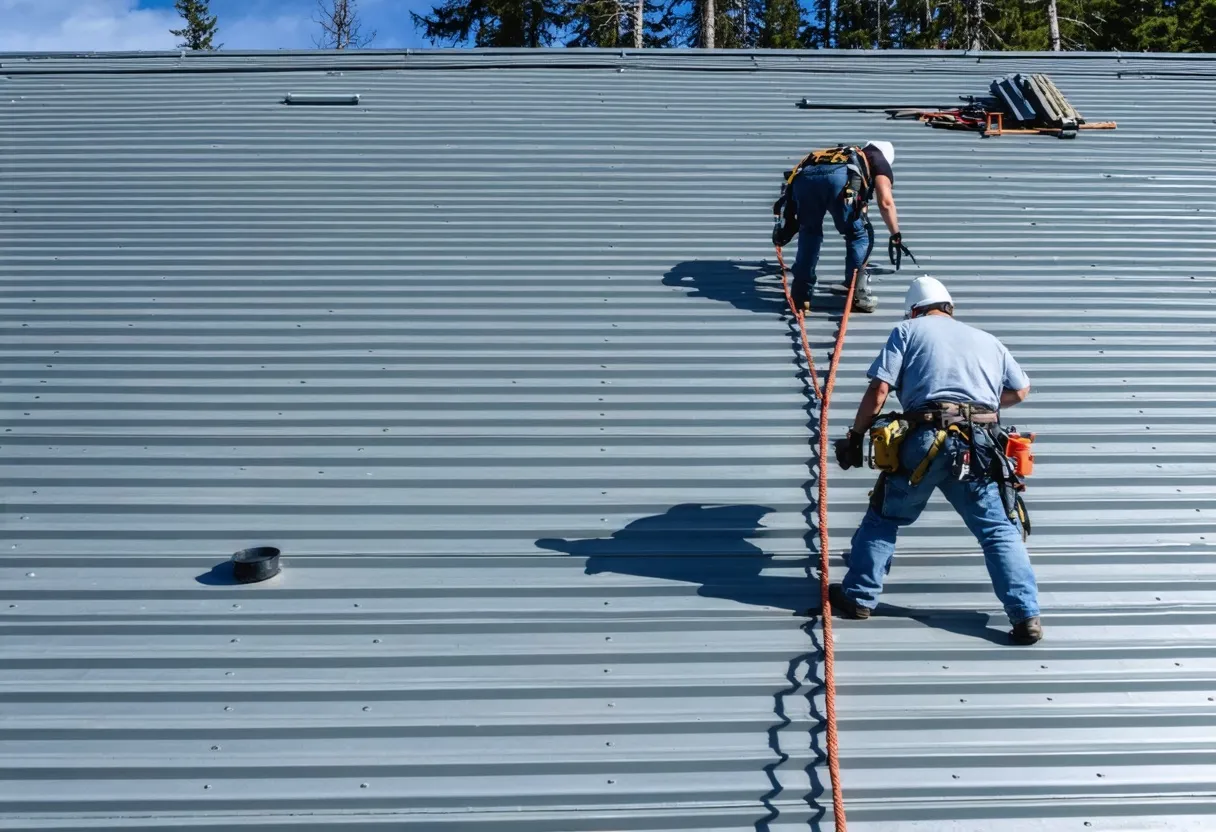
Fairbanks sits in a snow-load zone that most of the housing stock built before 1994 was never engineered around. If your roof deck, trusses, and fastening were sized to an older, lighter design-load assumption than the roughly 40 psf that interior Alaska's snow accumulation actually demands, a metal roof stops being a cosmetic upgrade and becomes a structural decision. Roofing Fairbanks Pros treats every standing seam metal roof estimate in Fairbanks as an engineering question first and a material choice second: what is the existing deck rated to carry, how will snow actually shed off this roof's specific pitch and exposure, and where will meltwater find a way to refreeze if the detailing is wrong.
That mindset runs through everything below. We're not describing "metal roofing" as a generic exterior upgrade — we're explaining how standing seam panels, snow retention hardware, structural fastening, and skylight flashing have to be specified together so the roof survives a Fairbanks winter without overloading a marginal truss system or dumping an uncontrolled sheet of snow onto whatever is standing underneath it.
Why Standing Seam Metal Roofing Fits Fairbanks' Snow-Load Reality
A large share of Fairbanks homes were framed before 1994, under snow-load assumptions that predate the data interior Alaska has since accumulated on sustained heavy snowfall. That gap matters on a roof more than almost anywhere else in the house, because the roofing material itself changes how much dead weight the structure is asked to carry through a full winter. Standing seam metal sheds accumulated snow in controlled slides rather than letting it sit, compress, and refreeze into a season-long load the way it does on a granulated asphalt surface. On a truss system that was never sized to today's understanding of a roughly 40 psf design load, that difference in how weight leaves the roof is not a minor efficiency — it is the margin between a roof that performs and one that is quietly overstressed every winter.
The Real Price Factors on a Fairbanks Metal Roof
Before we put a number on a standing seam metal roof in Fairbanks, we look at the three things that actually drive the cost, and we walk homeowners through each one rather than quoting off square footage alone. First is the condition and rated capacity of the existing deck — pre-1994 stock sometimes needs sheathing repair or structural reinforcement before panels can go on safely, and that work has to be scoped honestly up front rather than discovered mid-installation. Second is the roof's pitch and exposure, because a steep, south-facing slope sheds snow differently than a shallow northern one, and that geometry determines how much snow retention hardware the job actually needs. Third is penetration complexity — chimneys, vents, and skylights all require custom-formed metal flashing rather than the generic pipe boots and step flashing used on shingle roofs, and every one of those penetrations adds real labor.
Why Metal Outperforms Asphalt Here Specifically
Asphalt shingles rely on granule friction to hold snow in place, which in Fairbanks means snowpack builds in layers across the season, compresses, and refreezes directly against the shingle mat. Standing seam metal gives that snowpack almost nothing to grip, so it releases in slides instead of accumulating as dead load across an entire winter. That single behavioral difference is why metal keeps coming up in structural conversations about pre-1994 Fairbanks homes specifically, and not just in conversations about curb appeal or paint color.
What a Snow-Load-Engineered Metal Roof Delivers
How We Install Metal Roofing for Fairbanks Conditions
We inspect the existing roof deck and framing against current snow-load expectations before recommending panels, since pre-1994 Fairbanks homes sometimes need sheathing repair or structural reinforcement first.
We map panel run direction, seam spacing, and snow retention placement to the roof's actual pitch and exposure so shedding snow doesn't become a hazard at entries, decks, or walkways.
Chimneys, vents, and any metal roof skylight installation get custom-formed flashing matched to the panel profile, since that's where ice-dam leaks concentrate on standing seam systems.
Before panels close in, we confirm intake and exhaust ventilation paths are intact so the finished assembly doesn't trap the attic heat that drives ice-dam formation underneath the new roof.
We walk the finished roof with the homeowner to confirm seam lines, flashing details, and fastening points before calling the installation complete.
Snow Shedding, Ice Dams, and Metal Roof Skylights in Fairbanks
Ice dams form when heat escaping through an under-insulated or poorly vented attic melts snowpack from underneath, sending water down to the cold eave where it refreezes and backs up beneath the roofing surface. On a shingle roof, that backed-up water finds every staple hole and shingle lap it can. On a standing seam metal roof, the mechanically seamed panels and concealed fastener system give meltwater far fewer entry points overall — but only if the flashing at every single penetration was formed correctly for that specific panel profile rather than adapted from generic parts meant for a shingle roof.
Why Skylights Are the Highest-Risk Penetration
Skylights are the riskiest penetration on any Fairbanks roof, metal or otherwise, because they interrupt the panel run right where sliding snow load concentrates as it moves downhill. A metal roof skylight installation in Fairbanks needs curb flashing built specifically to the standing seam profile in use, with step and counter-flashing that accounts for how snow will move across the glass and refreeze at the downhill edge once temperatures swing back below freezing. We treat skylight flashing as its own scoped line item on every metal roofing estimate rather than an afterthought bolted onto the panel installation, because a mis-flashed skylight is one of the most common sources of a callback on an otherwise sound standing seam roof.
Snow Shedding Is a Safety Question, Not Just a Weatherproofing One
A standing seam roof that releases its full snowpack in a single slide can damage gutters, decking, parked vehicles, or a walkway directly below the eave. That's why snow retention — bars or pads positioned above entries, decks, and shared walls — belongs in the design conversation for any metal roof in Fairbanks, not treated as an optional accessory added after the fact. Where a roof faces a driveway, a front door, or a neighboring structure, we plan retention placement into the layout before panels ever go on the deck.
Engineering-First, Not Sales-First
Every metal roofing estimate we provide in Fairbanks starts with the condition of your existing deck and framing, not a flat per-square price. If your home predates 1994, we tell you plainly whether the structure needs reinforcement before standing seam panels go on — that's the honest starting point for a roof built to survive real Fairbanks snow load rather than just look good going up.
Metal Roofing Questions Fairbanks Homeowners Ask
For homes with adequate deck and truss capacity, standing seam metal sheds accumulated snow instead of holding it in place, which reduces the season-long dead load the roof structure has to carry — a real advantage in a climate defined by heavy, sustained snowfall.
Better, when it's detailed correctly. Standing seam panels and concealed fasteners give meltwater fewer entry points than shingle laps, but the custom flashing at chimneys, vents, and skylights has to match the panel profile or that advantage is lost.
Often yes, but it depends on the existing deck and truss condition. We assess structural capacity against current snow-load expectations before recommending panels, and some older homes need sheathing repair or reinforcement first.
If your roof sheds snow toward an entry, deck, walkway, or a neighboring structure, snow retention hardware is worth specifying so snow releases in controlled increments instead of one large slide.
The curb flashing has to be custom-formed to match the standing seam panel profile and account for how sliding snow moves across and around the glass, rather than using a generic flashing kit built for asphalt shingles.
Steel and aluminum panel systems are built to handle the wide seasonal swings between Fairbanks summer heat and deep winter cold without the granule loss and surface aging that shortens an asphalt shingle roof's service life.
Standing Seam Metal Roofing Across the Fairbanks North Star Borough
We install and flash standing seam metal roofing throughout Fairbanks and the surrounding borough, including North Pole and the Fort Wainwright area, where family and military housing spans the same mix of pre- and post-1994 construction found across the rest of the borough. We also work in Ester, Chena Ridge, and Fox — outlying areas where longer driveways, more tree cover, and more exposed roof lines change how snow load builds and how panels shed it compared to a tighter in-town lot.
Every one of these areas shares the same underlying risk profile: sustained heavy snowfall paired with drastic temperature shifts that drive freeze-thaw cycling and ice-dam formation season after season. What differs from property to property is exposure, roof pitch, tree cover, and the age and structural condition of the deck underneath — which is why we assess each roof on its own terms before quoting a standing seam system, rather than pricing metal roofing off square footage alone. Whether the job is a full standing seam replacement in North Pole, a metal roof skylight installation near Chena Ridge, or a snow-shedding retrofit on an older home in Ester or Fox, the same deck-first, flashing-first approach applies before a single panel goes up.
Request Your Free Roof Quote
Tell us about your roof and we'll get back to you with honest, upfront pricing.
More roofing services
Get a Straight Answer About Your Roof
Reach out for a free, no-pressure quote built around how your roof actually holds up to Fairbanks winters.