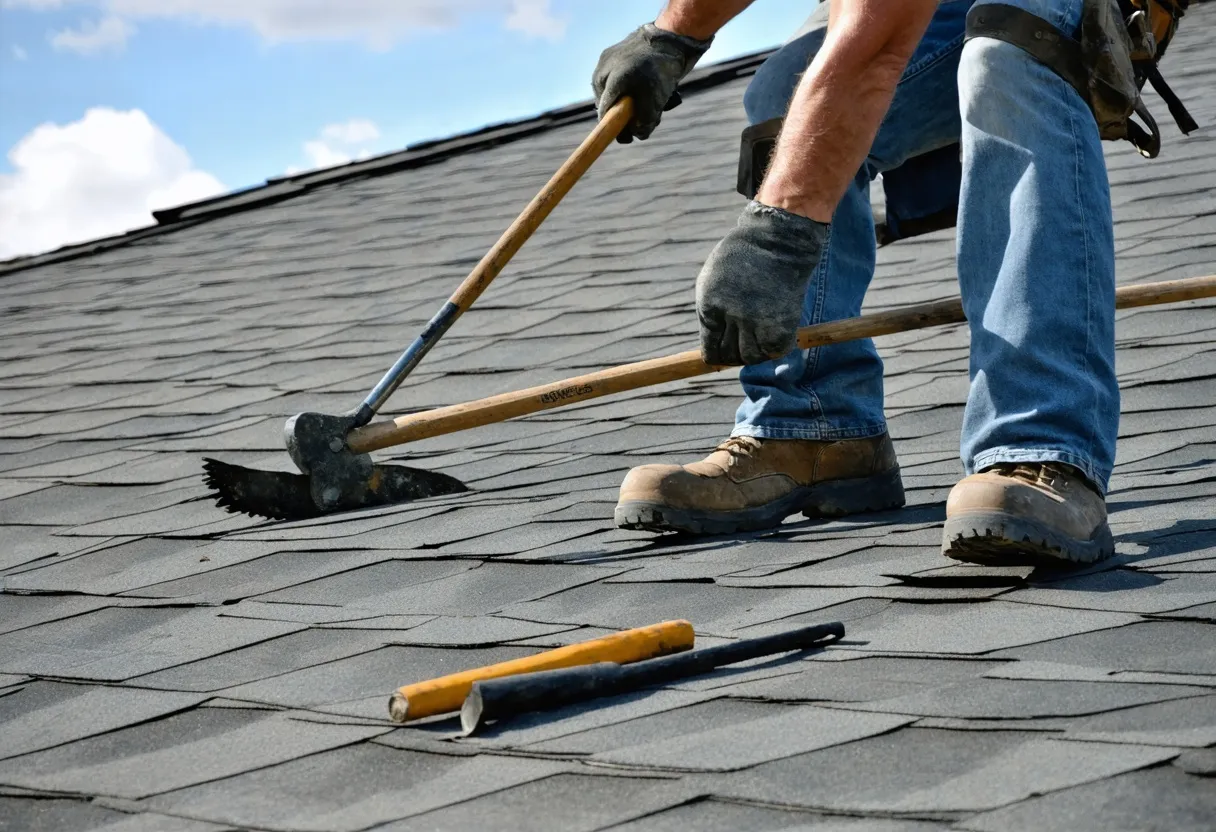
If your roof hasn't been inspected in the last two to three years -- or since the last major snow load or wind event -- you're guessing about its condition, not managing it. A roof inspection in Fairbanks is the single cheapest way to catch ice-dam damage, ventilation failures, and structural stress before they turn into a collapsed section, a soaked attic, or a five-figure emergency replacement. We inspect roofs across the Fairbanks North Star Borough with an engineering-first approach built specifically for Interior Alaska conditions: heavy snowfall, drastic temperature shifts, and the ice-dam cycle that damages more Fairbanks roofs than any other single factor.
This page covers what a real Fairbanks roof inspection includes, how our process works, what drives the cost of an inspection and any resulting repair, why local engineering knowledge matters more here than almost anywhere else in the country, and answers to the questions we hear most from homeowners and property managers. If you just need to book, jump to the bottom -- but if you want to understand what you're paying for (or what a "free inspection" actually gets you), read on.
Why Roof Inspections Matter More in Fairbanks Than Almost Anywhere Else
Every roofing market deals with weather. Fairbanks deals with a specific combination that most roofing crews trained in Lower 48 climates have never had to design around: heavy snow accumulation, extreme and repeated temperature swings between above- and below-freezing, and the ice-dam cycle that results from both. That combination stresses a roof structurally, thermally, and materially, all at once, and it does so every single winter.
It gets worse for a large share of the local housing stock. A significant portion of homes and outbuildings in the Fairbanks area were built before 1994, under older snow-load design assumptions -- many of these structures were not engineered to the 40 psf ground snow load standard that current construction in this region accounts for. That's not a defect you can see by glancing at shingles from the driveway. It's a structural margin question, and it's exactly the kind of thing a proper inspection is built to catch: sagging ridgelines, stressed rafters, deflection at load points, and sheathing that's been quietly absorbing more weight than it was designed for.
None of this is theoretical. It's the reason we built our inspection process around Interior Alaska engineering practices rather than a generic residential checklist, and it's why an inspection here needs to look at things a warm-climate inspection would never think to check.
What Our Fairbanks Roof Inspection Covers
A thorough inspection is not a five-minute walk-around. We evaluate every system that interacts with snow load, ice formation, and temperature cycling, because in Fairbanks these systems fail together, not in isolation.
Structural Load Assessment
- Visual and physical check of rafters, trusses, and ridge beams for sagging, cracking, or deflection
- Sheathing inspection from the attic side for stress marks, soft spots, or water staining that indicates chronic overload
- Flagging of pre-1994 construction where original framing may not meet current 40 psf snow load standards, with a plain-language explanation of what that means for your specific roof
- Assessment of snow accumulation patterns against roof pitch and structural capacity
Ice Dam Vulnerability Check
Ice dams form when heat escaping from the living space melts snow on the upper roof, that meltwater runs down to the unheated eave, and refreezes into a dam that backs water up under the shingles. In Fairbanks, this cycle repeats through the entire winter as temperatures swing, and it's the single most common cause of interior water damage we see on service calls. Our inspection traces the whole chain: attic heat loss points, insulation gaps, ventilation baffles, eave and valley construction, and any existing ice dam scarring on soffits, fascia, or interior ceilings. If you want the deep dive on how these form and how to stop them permanently, our ice dam prevention guide for Fairbanks homes walks through the full mechanism and the fixes, from ventilation corrections to heat cable placement.
Ventilation System Evaluation
Poor attic ventilation is the root cause behind most ice-damming and a major contributor to premature shingle failure, because trapped heat and moisture attack roofing materials from underneath. We check:
- Intake ventilation at soffits -- blocked, undersized, or missing
- Exhaust ventilation at the ridge or gable -- balanced against intake, not just present
- Baffle placement to confirm insulation isn't choking off airflow paths
- Signs of trapped moisture: frost on the underside of sheathing, mold staining, or rusted fasteners in the attic
Roof Covering Condition
Whatever material is on your roof, we inspect it for the failure patterns specific to Interior Alaska's freeze-thaw cycling:
- Asphalt shingles -- granule loss, cracking, curling, nail pops, and thermal splitting from repeated expansion and contraction
- Metal roofing -- seam integrity, fastener backout, panel oil-canning, and coating wear at snow-shed points
- Flat and low-slope roofs (TPO, EPDM) -- membrane seam separation, ponding water, and insulation saturation, all of which are more common on flat commercial roofs carrying heavy snow loads all winter
- Tile roofing -- cracked or displaced tiles from freeze-thaw and ice movement, and underlayment condition where tiles have shifted
- Skylights -- flashing integrity and seal condition, a common leak point where thermal movement is most pronounced
Moss, Algae, and Organic Growth
Shaded, north-facing sections of roof and areas that stay damp longer after snowmelt can develop moss and algae growth, which holds moisture against the roofing material and accelerates deterioration. We check for early growth, note drainage or shading conditions that are causing it, and recommend treatment before it undermines shingles or wood components.
Flashing, Drainage, and Penetrations
- Chimney, vent pipe, and skylight flashing for gaps, rust, or failed sealant
- Valley construction and ice/water shield presence at vulnerable transitions
- Gutter and drainage function, including whether current drainage is contributing to ice dam formation at the eaves
Storm and Wind Damage
After any significant wind event, heavy snow loading, or spring thaw, we check specifically for storm-related damage: lifted or torn shingles, displaced flashing, impact damage, and any fresh entry points for water that wouldn't have been there during a routine seasonal check.
How the Inspection Process Works
We keep the process straightforward because homeowners are usually calling us with a specific worry -- a stain on the ceiling, a neighbor's ice dam disaster, or just the fact that they've never had the roof looked at since buying the house.
- Initial contact and scheduling. Tell us the age of the roof if you know it, any visible issues (stains, missing shingles, ice buildup), and whether it's a residential or commercial property. This helps us bring the right equipment and allocate the right amount of time.
- Exterior assessment. We walk the roof surface (conditions permitting) or use elevated inspection methods when ice, pitch, or snow load makes walking the roof unsafe. We document covering condition, flashing, drainage, and any visible storm or ice damage with photos.
- Attic and structural assessment. This is the step most inspections skip and the one that matters most in Fairbanks. We go into the attic to check insulation, ventilation, framing condition, and signs of chronic moisture or structural stress.
- Findings review. We walk you through what we found in plain language -- not a checklist of jargon -- and explain what's urgent, what's worth monitoring, and what's fine. Photos are included so you can see exactly what we saw.
- Written estimate. If repairs, ventilation corrections, ice dam prevention work, or replacement are needed, you get a written roof estimate broken out by scope, so you know exactly what you're paying for and why.
Most residential inspections take 45 minutes to an hour and a half depending on roof size, pitch, and accessibility. Commercial and flat roofs, especially larger TPO or EPDM systems, typically take longer due to surface area and the number of penetrations and drains to check.
Free Roof Inspections and What "Free" Actually Means
We offer a free roof inspection in the Fairbanks area for homeowners who want a baseline assessment -- particularly useful after a storm, before winter, when buying a home, or if you've simply never had one done. A free inspection covers the exterior and attic assessment and gives you a clear picture of your roof's condition with photo documentation.
Where cost enters the picture is if the inspection uncovers something that requires specialized diagnostic work -- infrared moisture scanning on a flat commercial roof, for instance, or a detailed structural engineering evaluation for a pre-1994 home where we suspect the framing doesn't meet current snow-load standards. We'll always tell you upfront if a situation calls for that level of evaluation, and why, before any cost is incurred.
Roof Estimates: What Drives the Price
A roof estimate in Fairbanks depends on more variables than in most markets, because the climate factors that damage roofs here also complicate the repair. When we put together a written estimate, these are the main cost drivers:
- Scope of damage. A localized flashing repair costs a fraction of what ice-dam-related sheathing rot or structural reinforcement costs. Our inspection findings determine which category you're in.
- Roof material and pitch. Steep-slope shingle work, standing-seam metal, tile, and flat TPO/EPDM systems all require different labor, equipment, and material costs. Steeper pitches and harder-to-access roofs add safety equipment and time.
- Ventilation corrections. If poor ventilation is contributing to ice damming or premature material failure, fixing the intake/exhaust balance is often more cost-effective long-term than repeatedly patching ice-dam damage every spring.
- Structural work. Homes with pre-1994 framing that doesn't meet current snow-load expectations may need reinforcement, which is a different scope than a surface-level repair and priced accordingly.
- Time of year. Emergency leak repair during an active winter thaw cycle is more involved than scheduled warm-season work, simply because of access and safety conditions.
- Full replacement vs. repair. If your roof covering is past the point where repair makes sense, we'll walk you through replacement options -- our roof replacement guide for Fairbanks homeowners covers material choices and what a full tear-off and reinstall involves in this climate.
We provide low-cost, itemized estimates -- not vague lump-sum numbers -- specifically so you can see what portion of the cost is material, labor, and any structural or ventilation correction. That breakdown matters here because two roofs with identical square footage can have very different costs depending on ventilation condition and framing age.
Emergency and Same-Day Inspections
Some situations can't wait for a scheduled appointment: an active interior leak during a thaw cycle, visible sagging after a heavy snow event, or storm damage that's left your roof covering compromised. We offer same-day and emergency inspection response for these situations, because the gap between "water is coming in" and "we know exactly where and why" is where the most damage happens. If you're dealing with an active leak, call rather than filling out a contact form -- we prioritize emergency calls ahead of routine scheduling.
Roofing Types We Inspect and Service
Fairbanks properties run the full range of roofing systems, and each has different failure points in this climate:
- Asphalt shingle -- the most common residential covering; vulnerable to thermal cracking and ice-dam uplift at the eaves
- Metal (standing seam and screw-down panel) -- generally strong under snow load but needs seam and fastener checks after repeated thermal cycling
- Tile -- less common here but present on some properties; freeze-thaw movement is the primary concern
- Flat and low-slope TPO/EPDM -- common on commercial buildings; ponding water and membrane seam integrity are the top concerns under sustained snow load
- Skylights -- inspected and serviced as part of any residential roof, since they're a concentrated point of thermal movement and flashing stress
We also handle green/vegetative roofing assessments for property owners who've installed or are considering these systems -- drainage design and structural load capacity are the two factors that matter most for a vegetative roof to perform through an Interior Alaska winter.
Commercial Roof Inspections
Commercial buildings in the Fairbanks area -- flat and low-slope roofs especially -- carry sustained snow loads all winter and see less frequent visual monitoring than residential roofs, simply because nobody's looking at them from a driveway every day. We inspect commercial TPO, EPDM, and metal systems for membrane condition, drainage function, insulation saturation, and structural load concerns, and we provide the kind of documented, itemized reporting that property managers and building owners need for maintenance budgeting and insurance purposes.
How Long Does a Roof Actually Last in Fairbanks?
This is one of the most common questions we get, and the honest answer is: it depends heavily on installation quality, ventilation, and how proactively ice damming has been managed -- more so than on the manufacturer's rated lifespan printed on the shingle wrapper. Two identical roofs installed the same year, on the same street, can age very differently based on whether the attic ventilation was balanced correctly and whether ice dams were addressed early or allowed to repeat every winter. The freeze-thaw cycling and ice-dam mechanics common to this climate put more stress on a roof covering than the moderate climates most manufacturer ratings are tested for, which is why we generally recommend homeowners not rely on the printed rating alone. The most reliable way to know where your specific roof actually stands -- and what's shortening or extending its service life -- is a physical inspection of the covering, flashing, and attic conditions, not a generic timeline. That's exactly what our inspection is built to tell you, with photo documentation you can reference year over year.
Why Work With a Local Fairbanks Roofing Company
Roofing crews who learned their trade in milder climates often apply general-purpose standards that don't account for what actually damages a roof here. Snow-load engineering, ice-dam mechanics, and the specific vulnerabilities of pre-1994 Fairbanks-area construction aren't things you pick up doing residential reroofs in a climate that doesn't have sustained subzero stretches or multi-month snowpack. We work on roofs throughout the Fairbanks North Star Borough -- from the core of Fairbanks itself out through North Pole, past Fort Wainwright, and out to Ester, Chena Ridge, and Fox -- and that means we see the full range of how local terrain, tree cover, and building age affect roof performance across the borough, not just one neighborhood's housing stock.
We're licensed and insured, which matters for two practical reasons: it protects you if something goes wrong during the work, and it means any structural or ventilation corrections we recommend are backed by a company that's accountable for the work, not a fly-by-night crew that leaves town after the estimate.
Common Mistakes Fairbanks Homeowners Make With Roof Maintenance
- Waiting for a visible leak. By the time water is staining a ceiling, ice-dam damage or sheathing rot has usually been developing for one or more winters already.
- Chipping ice dams off by hand. This is a common DIY response that risks damaging shingles and doesn't address the ventilation or heat-loss issue causing the dam to form in the first place.
- Assuming a newer roof means no risk. Ventilation and installation quality matter more than age. A five-year-old roof with poor attic ventilation can ice-dam worse than a twenty-year-old roof that was vented correctly.
- Ignoring attic conditions entirely. Most homeowners never go into their attic. It's where the earliest warning signs of ice-dam damage and structural stress actually show up first.
- Treating structural concerns as cosmetic. A sagging ridgeline or bowed rafter on a pre-1994 home isn't an aesthetic issue -- it can be a snow-load capacity issue that needs an engineering-informed assessment, not a shingle patch.
Request Your Free Roof Quote
Tell us about your roof and we'll get back to you with honest, upfront pricing.
More roofing services
Get a Straight Answer About Your Roof
Reach out for a free, no-pressure quote built around how your roof actually holds up to Fairbanks winters.