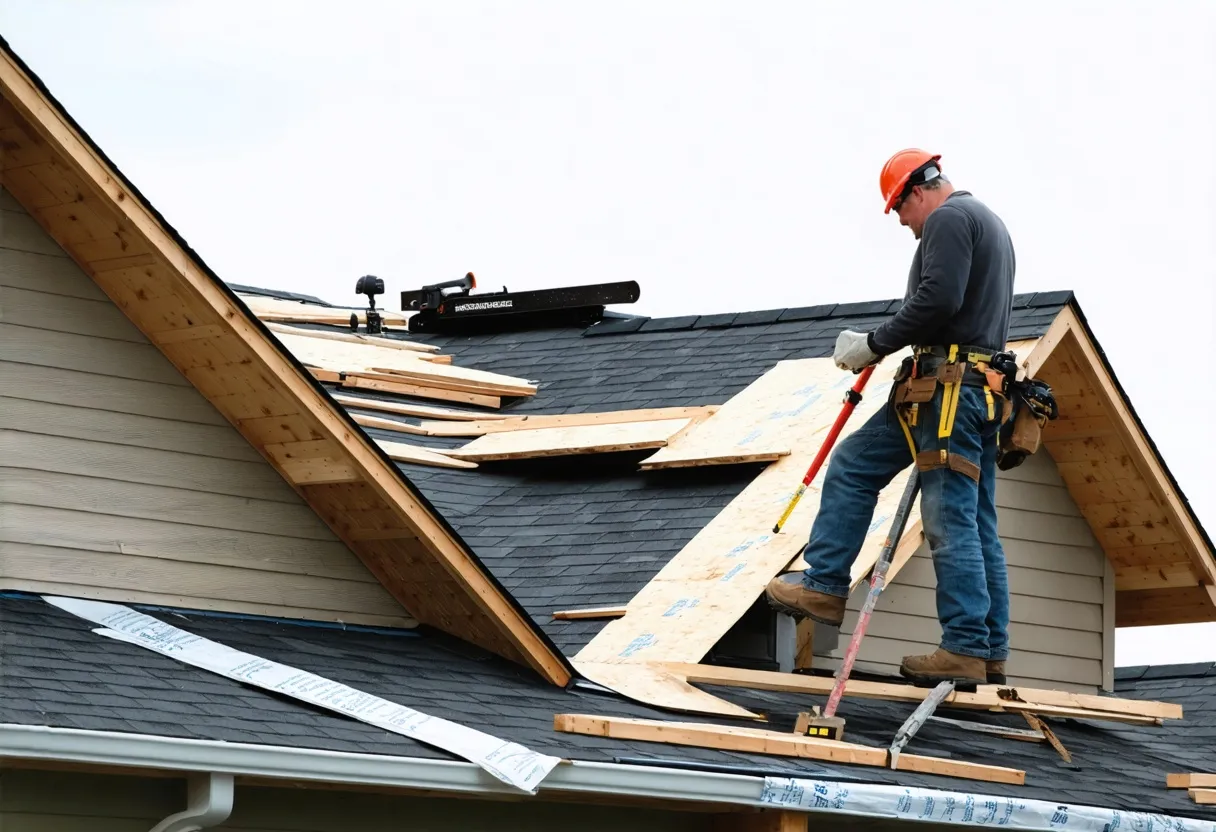
If you own a home or business in North Pole, AK, your roof is fighting a different war than roofs almost anywhere else in the country. Winters here routinely dump feet of snow onto structures that were often built decades before current load standards existed, and the freeze-thaw whiplash between January cold snaps and March sun exposure turns ordinary shingle seams into ice-dam factories. Roofing in North Pole isn't a cosmetic trade — it's structural engineering applied one shingle, one vent, and one flashing detail at a time.
We approach every job in North Pole, Fairbanks, and the surrounding communities with that reality front and center. This page walks through exactly what our roofing services cover, how our process works from first call to final inspection, what actually drives cost in this market, and the mistakes that turn a $400 repair into a $12,000 interior rebuild. If you'd rather talk to a person than read 3,000 words, our roofing team's main page has direct contact info and can get a crew scheduled.
Why North Pole Roofing Is a Different Discipline
North Pole sits inside one of the harshest residential snow-load environments in the United States. Heavy annual snowfall combined with drastic temperature shifts — bright, warming sun on a roof surface followed by nights well below zero — is the exact recipe that produces ice dams: a ridge of refrozen meltwater that backs up under shingles and forces water into the structure below. This isn't a rare weather event here; it's a predictable seasonal cycle that repeats every single winter.
Compounding the problem is the age of the local building stock. A large share of homes in the Fairbanks area, including North Pole, were built before 1994 — before current snow-load codes required roofs to handle roughly 40 pounds per square foot. Older trusses, rafters, and sheathing that were adequate for the standards of their era are frequently under-built for what a modern heavy-snow winter actually delivers. That's not a defect the homeowner caused; it's a mismatch between an older structure and a climate that hasn't gotten any gentler. It does mean that roofing decisions in North Pole need to account for structural capacity, not just surface materials.
That combination — aggressive ice-dam physics plus aging framing — is why we treat every North Pole roofing job as a structural assessment first and a materials job second. A crew that only knows how to nail shingles in a temperate climate will miss the ventilation and load-path issues that actually determine whether your roof survives the next decade.
Our Roofing Services in North Pole, AK
We provide full-spectrum residential and commercial roofing, built around the specific stresses of a subarctic winter. Core services include:
- Roof inspections and structural load assessments
- Ice dam prevention, removal, and root-cause repair
- Shingle and leak repair
- Storm and snow-load damage restoration
- Full roof replacement and re-roofing
- Ventilation diagnosis and correction
- Same-day and 24-hour emergency roofing response
- Skylight installation and replacement
- Commercial roofing and flat-roof systems
- Metal, asphalt shingle, tile, TPO, EPDM, and green/vegetative roofing options
Every one of these services is delivered with the same underlying logic: this roof has to survive a 40+ psf snow load, repeated freeze-thaw cycling, and months of sub-zero exposure without losing structural integrity or leaking into living space below.
Ice Dam Prevention and Repair
Ice dams form when heat escaping from the living space below warms the underside of the roof deck enough to melt the bottom layer of accumulated snow. That meltwater runs down the roof slope until it reaches the unheated overhang, where it refreezes into a ridge of ice. Subsequent meltwater has nowhere to go but backward, under the shingles, and eventually through the roof deck into insulation, drywall, and framing.
In North Pole's climate, with its wide day-to-night temperature swings and heavy, persistent snowpack, this cycle can repeat multiple times in a single winter. We address ice dams on two levels:
- Immediate mitigation — safe mechanical snow and ice removal from problem areas, calcium-chloride-based melt channels where appropriate, and temporary interior protection if active leaking has already started.
- Root-cause correction — the actual fix. This almost always comes down to insulation and ventilation. If your attic is losing heat unevenly, or intake/exhaust airflow isn't moving cold air across the underside of the deck, the dam will come back every year no matter how many times it's chipped off the eaves. We correct the air-sealing, insulation, and ventilation path so the roof deck stays uniformly cold and snow melts (or doesn't melt) evenly, rather than melting near the ridge and refreezing at the eaves.
If you're seeing brown water stains on ceilings near exterior walls, icicles thicker than a few inches hanging off the eaves, or visible ice ridges along the lower roofline, that's an active ice dam situation worth having looked at before it progresses into a full-blown leak.
Shingle and Leak Repair
Shingle damage in this region rarely comes from wind alone — it's usually a combination of ice expansion under the shingle tabs, granule loss from repeated freeze-thaw stress, and nail-pull as sheathing flexes under heavy snow load. We repair:
- Cracked, curled, or missing shingles from ice lift and wind
- Flashing failures around chimneys, vent stacks, and roof-to-wall transitions — a common leak source when metal flashing contracts in extreme cold
- Deteriorated pipe boots and collars that split from UV and cold-cycling
- Valley leaks where snow load concentrates and ice dams are most aggressive
- Deck rot and sheathing damage once water has already gotten underneath the roofing material
Leak repair only works long-term if you find where the water is actually entering, which is frequently several feet upslope from where the stain shows up inside. We trace leaks along the actual water path — under shingles, along flashing laps, through ice-damaged valleys — rather than just patching the spot above the ceiling stain.
Roof Inspections
A proper roof inspection here has to check more than shingle condition. Given the age of much of the local housing stock and the snow-load realities described above, our inspections cover:
- Shingle/membrane surface condition, granule loss, and remaining service life
- Flashing integrity at all penetrations and transitions
- Attic ventilation — intake at the soffits, exhaust at the ridge or gables, and whether airflow is actually reaching every rafter bay
- Insulation depth and any gaps or compression that create uneven heat loss
- Signs of past or active ice-dam intrusion — staining, rot, or mold on the underside of the deck
- Structural framing condition, particularly on pre-1994 homes where we check rafter/truss spacing and sizing against the load the roof is actually seeing each winter
- Ventilation and moisture issues in commercial low-slope assemblies
We provide written findings with photos, not just a verbal "looks fine." If you're buying a home, refinancing, or just want a baseline before winter, an inspection gives you a documented starting point rather than a guess.
Ventilation Issues
Poor attic ventilation is, in our experience, the single most common underlying cause of both ice dams and premature shingle failure in this region. When intake and exhaust airflow aren't balanced, warm, moist air from the living space accumulates in the attic. That moisture condenses on cold sheathing, leading to mold, wood rot, and reduced insulation effectiveness — and the trapped heat accelerates the melt-refreeze cycle that produces ice dams in the first place.
Common ventilation problems we find on North Pole homes include soffit vents blocked by blown-in insulation, bathroom exhaust fans vented directly into the attic instead of outside, insufficient ridge or gable exhaust area for the attic's size, and vapor barriers that were never properly installed or have failed over time. Fixing these issues is frequently less expensive than a full re-roof and often solves ice-dam and moisture problems that materials alone can't.
Moss and Algae Growth
Moss and algae are less aggressive here than in wetter coastal climates, but they aren't absent — they tend to show up on north-facing slopes, heavily shaded roof sections, and areas where snow sits longest into spring, keeping the shingle surface damp for extended periods after the rest of the roof has dried out. Left alone, moss holds moisture against the shingle surface, lifts tabs, and accelerates granule loss, which shortens the roof's effective lifespan. Where we find it, we remove it with a low-pressure approach that won't strip granules, and we look at whether trimming back overhanging branches or improving airflow to that section of roof would prevent regrowth.
Emergency Roofing: North Pole, Fort Wainwright, and Surrounding Areas
Roof emergencies in this climate don't wait for business hours. A sudden warm spell that triggers rapid snowmelt, a wind event that tears flashing loose, or an ice dam that finally breaches the roof deck can turn into an active interior leak in the middle of the night. We provide same-day and 24-hour emergency response for North Pole, Fort Wainwright, and the greater Fairbanks area, because a delayed response on an active leak means saturated insulation, damaged drywall, and in the worst cases, structural rot that turns a repair into a rebuild.
Emergency calls typically involve temporary weatherproofing — tarping, ice removal from the active leak path, and interior water mitigation — followed by a permanent repair scheduled as soon as conditions and materials allow. If you're dealing with an active leak right now, our emergency roof repair team is set up specifically for this kind of fast-response call, including service to Fort Wainwright and nearby communities.
Storm and Snow-Load Damage Restoration
Beyond routine wear, this region sees real storm-driven roof damage: high-wind events that lift shingles or tear off ridge caps, heavy snow loading that stresses framing beyond its comfortable margin, and the aftermath of ice dams that have already breached the roof deck. Restoration work here isn't just replacing damaged shingles — it's assessing whether the framing itself took on excess load, whether sheathing needs replacement due to water saturation, and whether interior insulation and drywall need remediation before the roof itself gets closed back up.
We document storm damage thoroughly with photos and written assessments, which matters if you're filing an insurance claim. A vague "roof was damaged in the storm" note doesn't hold up as well as a detailed record tying specific damage to a specific weather event.
Roof Replacement in North Pole
Not every roof problem is a repair candidate. When a roof is past its practical service life, has widespread deck damage from years of ice-dam intrusion, or simply wasn't built to the load standards this climate now demands, replacement is the honest recommendation. A full re-roof is also the point where we can correct underlying structural and ventilation issues at the same time — adding proper intake/exhaust ventilation, upgrading underlayment to an ice-and-water-shield product along the eaves and valleys, and in some cases reinforcing framing to better match current snow-load expectations.
If your roof is showing multiple repair-worthy issues at once, granule loss across large sections, or recurring ice dams no matter how many times we fix the symptom, it's worth getting a straight answer on repair-versus-replace. Our roof replacement page goes into more detail on that process, timelines, and what a full tear-off and re-roof involves for homes in this market.
Roofing Materials: What Actually Holds Up Here
Material choice matters more in a subarctic climate than almost anywhere else, because the material has to survive extreme cold, heavy static snow load, and repeated freeze-thaw cycling without becoming brittle or losing its seal integrity.
Asphalt Shingles
Still the most common residential choice, largely on cost. In this climate, shingle quality and installation detail matter more than the material category — proper ice-and-water-shield underlayment at eaves and valleys, correctly lapped flashing, and adequate ventilation underneath make far more difference to lifespan than which shingle brand you pick.
Metal Roofing
Increasingly popular for good reason: metal sheds snow more readily than shingles, resists ice-dam formation somewhat better due to its smooth surface and thermal properties, and holds up well over decades of cold-cycling. It costs more upfront but tends to outlast shingle roofing significantly in this climate, which changes the lifetime cost math for homeowners planning to stay put.
Tile Roofing
Less common on standard residential builds here due to weight and cost, but viable in specific applications where the underlying structure is engineered for it. Tile's durability against UV and weathering is excellent, though installation detail around snow retention and flashing needs to be correct for this snow-load environment specifically.
Flat, TPO, and EPDM Roofing
Common on commercial buildings and some residential additions. Flat and low-slope roofs face a unique challenge here: snow doesn't shed on its own, so load management and drainage design are critical. TPO (thermoplastic polyolefin) offers good seam-welded waterproofing and reflectivity; EPDM (rubber membrane) is a proven, flexible option that handles cold-weather flexibility well, which matters given how brittle some membrane materials become in sustained sub-zero conditions. We assess drainage slope, insulation (tapered or otherwise), and membrane seaming quality as the real determinants of how these systems perform through a Fairbanks-area winter.
Green and Vegetative Roofing
Green roofing — vegetative roof systems built over a waterproof membrane — is a growing option for both energy performance and stormwater management, and it's achievable in this climate on suitable structures, typically flat or low-slope commercial or institutional buildings with adequate structural capacity to carry the added weight of soil, plantings, and retained moisture (which, combined with snow load, is a real engineering consideration). Where structural capacity supports it, a green roof adds insulation value and can reduce the intensity of the freeze-thaw cycling the membrane underneath experiences. We evaluate structural load capacity first, before recommending this option, given the snow-load context already at play on most buildings here.
Skylight Installation
Skylights bring daylight into a home during winters where daylight hours are genuinely scarce, but they're also one of the most common leak points on any roof if not installed and flashed correctly — and in this climate, a poorly flashed skylight becomes a direct ice-dam entry point, since the curb interrupts the smooth snow-shedding surface of the roof and creates a natural spot for meltwater to pool and refreeze. We install and replace skylights with flashing details specifically suited to heavy snow load and ice-dam conditions, including proper curb height, ice-and-water-shield integration around the perimeter, and condensation-resistant glazing appropriate for the interior/exterior temperature differential this climate produces.
Commercial Roofing
Commercial buildings in and around North Pole face the same snow-load and ice-dam physics as homes, just at a larger scale and often with flat or low-slope roof assemblies that don't shed snow the way a pitched residential roof does. Commercial roofing work we handle includes:
- Flat roof and low-slope membrane installation and repair (TPO, EPDM, modified bitumen)
- Snow load monitoring and removal programs for large flat roofs
- Drainage and tapered insulation design to prevent standing water and ice buildup
- Routine commercial inspections and preventive maintenance programs
- Storm and snow-load damage restoration for commercial structures
Commercial roof failures tend to be expensive fast — a flat roof that ponds water or accumulates unmanaged snow load can put real stress on the building structure, not just the roof membrane. Preventive inspection and maintenance is disproportionately cost-effective on commercial low-slope roofs compared to residential pitched roofs.
Licensed, Insured, and Built for This Climate
Roofing work here involves real structural stakes — snow load, ice-dam water intrusion, and framing that may already be under-built relative to current standards. Working with a licensed and insured contractor protects you on both the workmanship side and the liability side: if something goes wrong during the job, insurance coverage means it's not your problem to absorb. We carry the licensing and insurance coverage appropriate for residential and commercial roofing work in Alaska, and we're glad to provide documentation before work begins — you shouldn't have to take that on faith.
Pricing and Free Quotes
We provide free, no-obligation quotes for roofing work in North Pole and the surrounding Fairbanks area. A quote typically follows a physical inspection rather than a phone estimate, because the factors that actually drive cost here — snow load, framing condition, existing ventilation, and the extent of any ice-dam damage — can't be accurately assessed without eyes on the roof.
What Actually Affects Cost
- Roof size and pitch — steeper, more complex rooflines take longer to work and require more safety setup, especially with snow or ice present.
- Material choice — asphalt shingle, metal, tile, and membrane systems have significantly different material and labor costs, and different long-term value given this climate's wear rate.
- Extent of deck and framing damage — if ice-dam intrusion has already rotted sheathing or framing, that has to be replaced before new roofing goes on, which adds cost but isn't optional.
- Ventilation corrections — adding or correcting intake/exhaust ventilation during a repair or replacement adds some cost but prevents the same problem from recurring.
- Time of year — winter emergency work involves snow and ice removal and more difficult site conditions than a summer-scheduled replacement.
- Structural reinforcement — on older, pre-1994 homes, bringing framing up to better handle current snow-load expectations is an added cost, but one that materially extends the roof's — and the building's — service life.
We'd rather give you an honest number that accounts for what your roof actually needs than a low headline estimate that turns into change orders once the tear-off starts.
How the Process Works
- Initial contact and scheduling. You call or request a quote, and we schedule an on-site visit — expedited immediately if it's an active leak or emergency situation.
- Inspection and assessment. We examine the roof surface, flashing, attic ventilation, insulation, and — where relevant — framing condition, and document findings with photos.
- Written quote. You receive a detailed, itemized quote covering materials, labor, and any structural or ventilation corrections we recommend, with the reasoning behind each line item.
- Scheduling the work. We plan around weather windows — critical in this climate, since certain materials and sealants perform poorly if installed in extreme cold, and tear-offs need a weather buffer to avoid exposing the structure during a snow event.
- The work itself. Tear-off (if applicable), deck repair, ventilation correction, underlayment and ice-and-water-shield installation, new roofing material installation, and flashing detail work at every penetration and transition.
- Final walkthrough and documentation. We review the completed work with you, provide documentation for warranty and, if applicable, insurance purposes, and clean up the site fully — no leftover nails or debris.
Request Your Free Roof Quote
Tell us about your roof and we'll get back to you with honest, upfront pricing.
More roofing services
Get a Straight Answer About Your Roof
Reach out for a free, no-pressure quote built around how your roof actually holds up to Fairbanks winters.